“I looked at many campuses and programs when I decided to pursue my education, and it was the only platform that worked with my desire, my need to stay in the kitchen. It’s just like any brick and mortar campus, you will get out of it what you put into it. It has made me a better cook, a better baker, a better leader, a better businessman, and most importantly, a better teacher to my staff.”*


Lance McWhorter, Online Culinary Arts Student
meet escoffier chef-in-residence
Kristen Kish is the host of Top Chef and Escoffier’s new Chef-in-Residence. Chef Kish will help inspire Escoffier students through a special lecture class, exclusive content, and other engagement activities. About Kristen Kish
Did you Know?
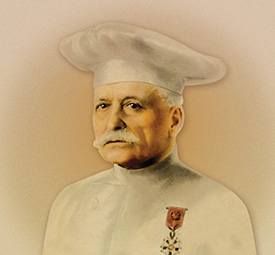
Auguste Escoffier was known as the King of Chefs and the Chef of Kings!
His contributions to the culinary world include, but are not limited to: creating the concept of à la carte menus, designing the five mother sauces, promoting farm-to-table cuisine, and instituting sanitation standards. His influence on cuisine is felt in kitchens across the world nearly a century later!


BEST COLLEGES FOR CULINARY ARTS
Ranked one of the Best Colleges for Culinary Arts in America in 2026 by Niche.com


*Based on comparable student population data for Austin and Boulder as currently reported in Integrated Postsecondary Education Data System (IPEDS).
Auguste Escoffier School of Culinary Arts Graduation*
Your Goals, Your Passion, Your Future
Our Mission
To cultivate passion and lifetime careers in culinary, hospitality and health by offering affordable, accessible and socially minded education and opportunities to learn.
Accreditations & Associations
We are the only U.S. accredited institution offering 100% online degrees with culinary classes and hands-on industry externships!1

U.S. Department of Education Recognized Agency

Colorado Department of Higher Education

National Council for State Authorization Reciprocity Agreements

2026-2027 Military Friendly® School

2026-2027 Military Friendly® Spouse School
Our online programs are available through the Boulder campus. Auguste Escoffier School of Culinary Arts in Boulder, Colorado is nationally accredited by the Accrediting Council for Continuing Education and Training (ACCET).
It is also approved and regulated by the Colorado Department of Higher Education (CDHE), Division of Private Occupational Schools. Auguste Escoffier School of Culinary Arts (Boulder, CO) has been approved by CDHE to participate in the National Council for State Authorization Reciprocity Agreements (NC-SARA).
“As an active duty soldier, online school is a big way to stay consistent with education. There is a big need for culinary arts training in my career, but there is not a lot of time to accomplish this. It’s doable, I’m doing it right now!”*
Michael Allen, Online Culinary Arts Graduate
Curriculum
Multiple classes can occur during one 6-week session.
Culinary Foundations I
This course begins with food safety and sanitation in the professional kitchen, including proper hygiene, food handling, food storage, cleaning, pest control, in a food service operation. Students become acquainted with tools, utensils, and equipment in professional food service and discuss kitchen layout. Fundamental knife skills, cutting techniques, and the concept of mise en place are covered. Production of stocks, soups are included along with an introduction to grain and legume cookery. An introduction to the role of heat in various cooking techniques rounds out a foundational knowledge in culinary arts.
Culinary Foundations II
This course offers a deeper level continuation of understanding of foundational culinary skills. Students will be introduced to various dry-heat, moist-heat and combination-heat cooking technqiues, as well as understand the role of the five Mother Sauces in cuisine. A greater emphasis on knife cuts and accuracy is focused upon, and plating and presentation are introduced to give students the basic skills necessary to advance in a culinary arts education.
Doughs and Leaveners
This course covers ingredient function, leavening agents and mixing methods related to doughs with an emphasis on understanding bakeshop techniques to produce savory results. Production of quick-doughs and batters, flatbreads, yeast-raised-doughs, various formations and related accompaniments.
Culinary Garde Manger
The Garde Manger is responsible for cold foods, including salads, sandwiches, dressings, pâtés, cold hors d’oeuvres, and various buffet items. Students will prepare items to be served cold in a sanitary and appealing way, and learn about various cold kitchen production techniques, including methods of preserving meat and produce.
American Regional Cuisine
Students have the opportunity to gain an understanding of American Regional cuisine by exploring history, traditional and indigenous ingredients, flavor components and cooking techniques. Application of classical and contemporary cooking techniques, plate design, and application of proper sanitation techniques.
Western European Cuisines
Students have the opportunity to gain an understanding of Western European cuisines by exploring history, traditional and indigenous ingredients, flavor components and cooking techniques. Application of classical and contemporary cooking techniques, plate design, and application of proper sanitation techniques.
Farm to Table Kitchen
This course provides the students with a hands-on experience on a working farm/ranch or vineyard/orchard. The Instructor conducts the lecture and lab activities to coincide with the harvested item(s) for a catered event executed by the students. Students in the residential delivery of the course, under the direction of a Farmer/Rancher collect or harvest foods and/or proteins for the students’ lab activities.
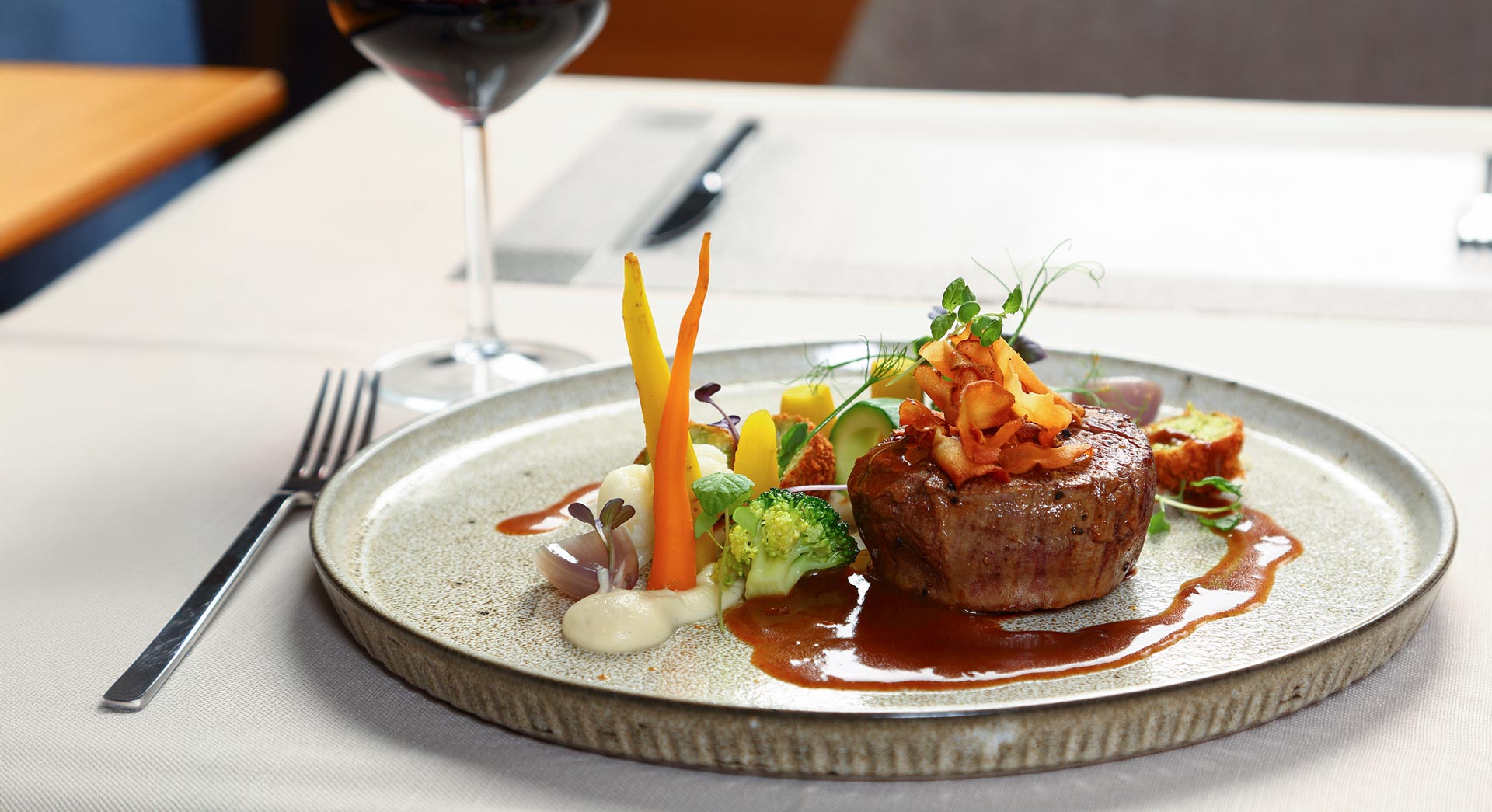
This class also focuses on the ever-growing relationship between the chef and the farm/factory/ranch. This course will result in a daily lab menu production of selected sustainable and/or organic foods. Also presented will be concepts of traditional and nontraditional farming and sourcing for vegetables, as well as the impact of land and sea animal-based food sourcing as practiced globally
Student Success Essentials
This course equips students with essential tools and skills to thrive in their culinary studies and prepare for future success in the culinary industry. Students will develop effective time management strategies, refine professional communication skills, and gain valuable insights into available Student and Career Services. The course is designed to set learners on a path toward achieving their academic and professional goals.
Foodservice Management
This course covers the different types of commercial food service operations, and how to manage each using the principles of good service. Students study the hierarchy of management in food service, and the skills needed to succeed as a manager: training employees, motivating them, disciplining them, and creating a safe and positive work environment. The course also explores how to act responsibly and make decisions that benefit the company.
Menu Design & Management
This course explores different types of menus and their applications. The course covers all aspects of menu planning and design, ranging from visual design to price analysis to making use of available resources. The menu is both a financial tool and a communication tool, and its use as both is explained. Students learn about both food and beverage menus.
Purchasing and Cost Control
Three out of five foodservice operations fail within five years of opening, often due to money mismanagement; this course gives students the skills to not only keep their restaurant in business but also turn a profit. This course introduces students to purchasing, receiving, inventory management and menu pricing. Students learn how to minimize costs and maintain a full range of customer services. The course progresses from the fundamentals of culinary math into an overview of storeroom operations, inventory, portion control, as purchased and edible portions, ingredient conversions, and recipe costing.
Culinary Entrepreneurship
This course is a culmination course in entrepreneurship. This course covers such topics as business planning, pricing, credit management, government regulation, legal concerns. Business ethics and the crucial role and importance of management and leadership are also covered. For the final project for this course, the student will complete and present a business plan for a food service operation.
Culinary Industry Externship I
This course provides opportunities for real life experiences in an operational restaurant or related business and builds on the skills and techniques covered in previous courses. Externship courses are specific to the area of program concentration and must be completed for each concentration in which a student is enrolled. Externship must be completed for each new program enrollment.
Additional Opportunities For Students
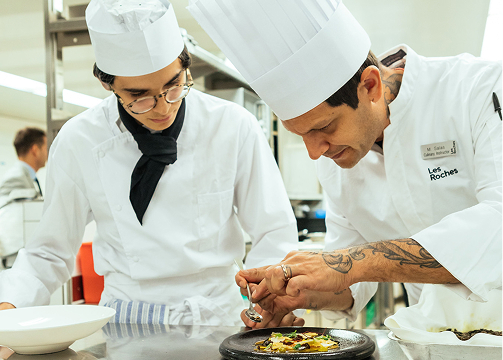
International Study Opportunities
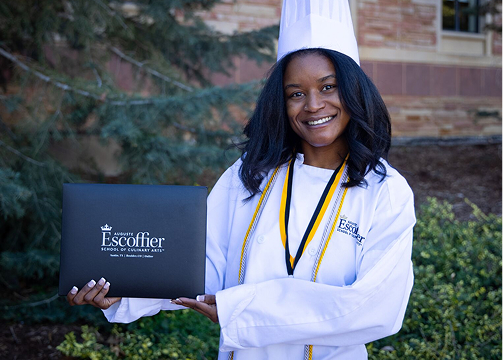
Annual graduation in Boulder, CO
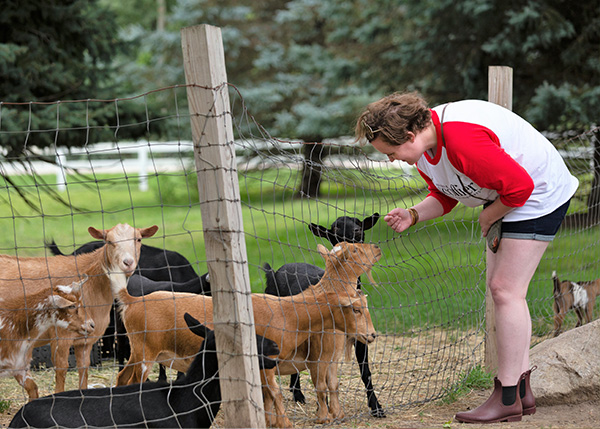
Farm to Table® Immersion Events throughout the year
Lance, Online Culinary Arts Student*
Program Highlights

Modernized
Instruction

Connect with Your
Chef Instructors

TEN 6-WEEK
TRAINING BLOCKS

100% ONLINE CLASSES
WITH A HANDS-ON INDUSTRY EXTERNSHIP

Entrepreneurial
Curriculum

KITCHEN LAB:
HANDS-ON ASSIGNMENTS

Practical Skills &
Operational Awareness

EMPHASIS ON RESTAURANT
MANAGEMENT & COST CONTROL

CAREER PLANNING
AND PREPARATION

“The Escoffier online education is a more accessible and affordable quality education available to a great many more people than the classic brick and mortar campus.”
Chef Jeremiah Tower, American Celebrity Chef & Father of California Cuisine
SHARI, Online Culinary Arts Student*
Tuition
$24,688
Total Program Cost*
No Application Fee!
Financial Aid is available to those who apply and qualify
*The total program cost listed above encompasses tuition, tool kit, uniform, and an optional non-refundable technology fee if you do not already have a computer. As textbooks are delivered electronically, the cost of books used in the program and available online to the students are included in the tuition cost. For more cost details, refer to our catalog.
Access to the right technology will be vital to your success at Escoffier.
If you do not currently have access to a computer, we highly recommend purchasing one before your start date. Chromebook computers are typically a very affordable option, and will meet all requirements of our programs.
How do I get a Chromebook?
You can get a Chromebook in any one of the following ways:
Purchase from a retailer:
Walmart offers many options, and some of their Chromebooks even include monthly finance plans.
Amazon is another retailer that offers a variety of Chromebook options at affordable prices.
Purchase one in-person. Walmart, Target, Best Buy, and other large stores sell Chromebooks in-store. This option allows you to bring your Chromebook home that same day.
Purchase through Escoffier:
If you’re unable to purchase directly from a store or retailer such as Walmart or Amazon, talk to your Financial Aid Advisor to find out more about buying one through Escoffier’s Chromebook program for the $250 Technology Fee. Financial Aid Advisors are available at (877) 452-5489 Option 1.
Please note that if you purchase your Chromebook yourself, you will not pay the $250 Technology Fee.
Professional-Grade Toolkits Featuring ZWILLING products
Carefully curated with essential cutlery and tools to help you hone your craft
A Typical Week at Escoffier
Approximately 15-23 hours per week is spent on school related activities depending on program, credential, and personal pace.
The week runs from Wednesday to Tuesday with weekly due dates for student work.
Each week’s assignments will be broken into categories of learn, discuss and experience.
LEARN
Each week will begin with assigned reading via our online platform. Students will also watch the recorded chef demos for the week here.
DISCUSS
Students participate in discussion boards where the class responds to topics and questions the chef posts in regards to what you’re learning that week. There will also be live lessons held through a video platform each week. Live Sessions are your opportunity to interact with your chef and classmates. Students who attend or watch the archive generally perform better in school.
EXPERIENCE
This is where students turn their kitchen into their classroom lab, and cook! With all the prep work completed, students can now work through assignments by following our production sheet from start to finish, taking photos where instructed to.
“For me, having access to Escoffier online means it is now possible to receive the culinary education I have desired, while still being able to grow my business and take care of my busy family, without even having to leave our valley.”*
Kristen Douglas, Online Culinary Arts Graduate
1Our Boulder, CO campus is the only accredited institution in the United States to offer both fully online diploma and degree programs with culinary classes and hands-on industry externships. We are accredited by ACCET – A Partnership for Quality®️. ACCET is listed by the U.S. Department of Education as a nationally recognized accrediting agency.
*This information may not reflect every student’s experience. Results and outcomes may be based on several factors such as geographical region or previous experience.
For more information about our completion rates and other important consumer information, please visit our website.
Read our privacy policy.
Copyright © 2026 Auguste Escoffier School of Culinary Arts. All rights reserved.
Auguste Escoffier School of Culinary Arts is a registered trademark of Triumph Higher Education Group. The Auguste Escoffier School of Culinary Arts Logo is a trademark of Triumph Higher Education Group.